Heart Attack

Heart Attack
Alternative names
Myocardial infarction; MI; Acute MI
Definition
A heart attack (myocardial infarction) occurs when an area of heart muscle dies or is permanently damaged because of an inadequate supply of oxygen to that area.
Causes, incidence, and risk factors
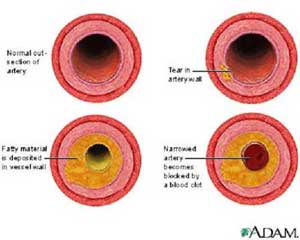
Most heart attacks are caused by a clot that blocks one of the coronary arteries (the blood vessels that bring blood and oxygen to the heart muscle). The clot usually forms in a coronary artery that has been previously narrowed from changes related to atherosclerosis. The atherosclerotic plaque (build up) inside the arterial wall sometimes cracks, and this triggers the formation of a clot, also called a thrombus.
A clot in the coronary artery interrupts the flow of blood and oxygen to the heart muscle, leading to the death of heart cells in that area. The damaged heart muscle loses its ability to contract, and the remaining heart muscle needs to compensate for that weakened area.
Occasionally, sudden overwhelming stress can trigger a heart attack.
The risk factors for coronary artery disease and heart attack include:
- Smoking
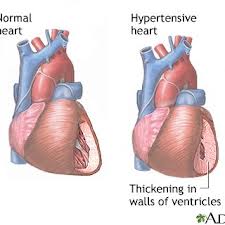
- High blood pressure
- Too much fat in your diet
- Poor blood cholesterol levels, especially high LDL ("bad") cholesterol and low HDL ("good") cholesterol
- Diabetes
- Male gender
- Age
- Heredit
Many of the risk factors listed are related to being overweight.
Newer risk factors for coronary artery disease have been identified over the past several years. Heart attacks account for 1 out of every 5 deaths. It is a major cause of sudden death in adults.
Symptoms
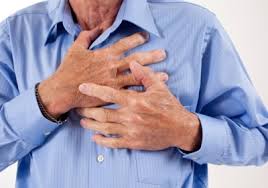
Chest pain behind the sternum (breastbone) is a major symptom of heart attack, but in many cases the pain may be subtle or even completely absent (called a "silent heart attack"), especially in the elderly and those with diabetes. Often, the pain radiates from your chest to your arms or shoulder; neck, teeth, or jaw; abdomen or back. Sometimes, the pain is only felt in one these other locations.
The pain typically lasts longer than 20 minutes and is not fully relieved by rest or nitroglycerine, both of which can relieve pain from angina.
The pain can be intense and severe or quite subtle and confusing. It can feel like:
- Squeezing or heavy pressure
- A tight band on the chest
- "An elephant sitting on [your] chest"
- Bad indigestion
Send Enquiry